As an Amazon Associate I earn from qualifying purchases.
A dog bed can sit in the corner looking mostly fine for weeks. Then you pick it up.
There is fur packed into the seams. A little grit falls onto the floor. One side smells like damp paws, even though your dog has not been outside in the rain for days. It is not always one big mess. Most of the time, a dog bed just slowly becomes less clean until you finally notice it.
Washing it sounds simple enough. Put it in the machine, add detergent, done.
Except some dog beds come out of the wash looking worse than before. The cover shrinks a little. The foam gets bent. A bolster dries lumpy. Or the bed feels dry on the outside but still smells odd the next morning because something inside stayed damp.
That is the part worth avoiding.
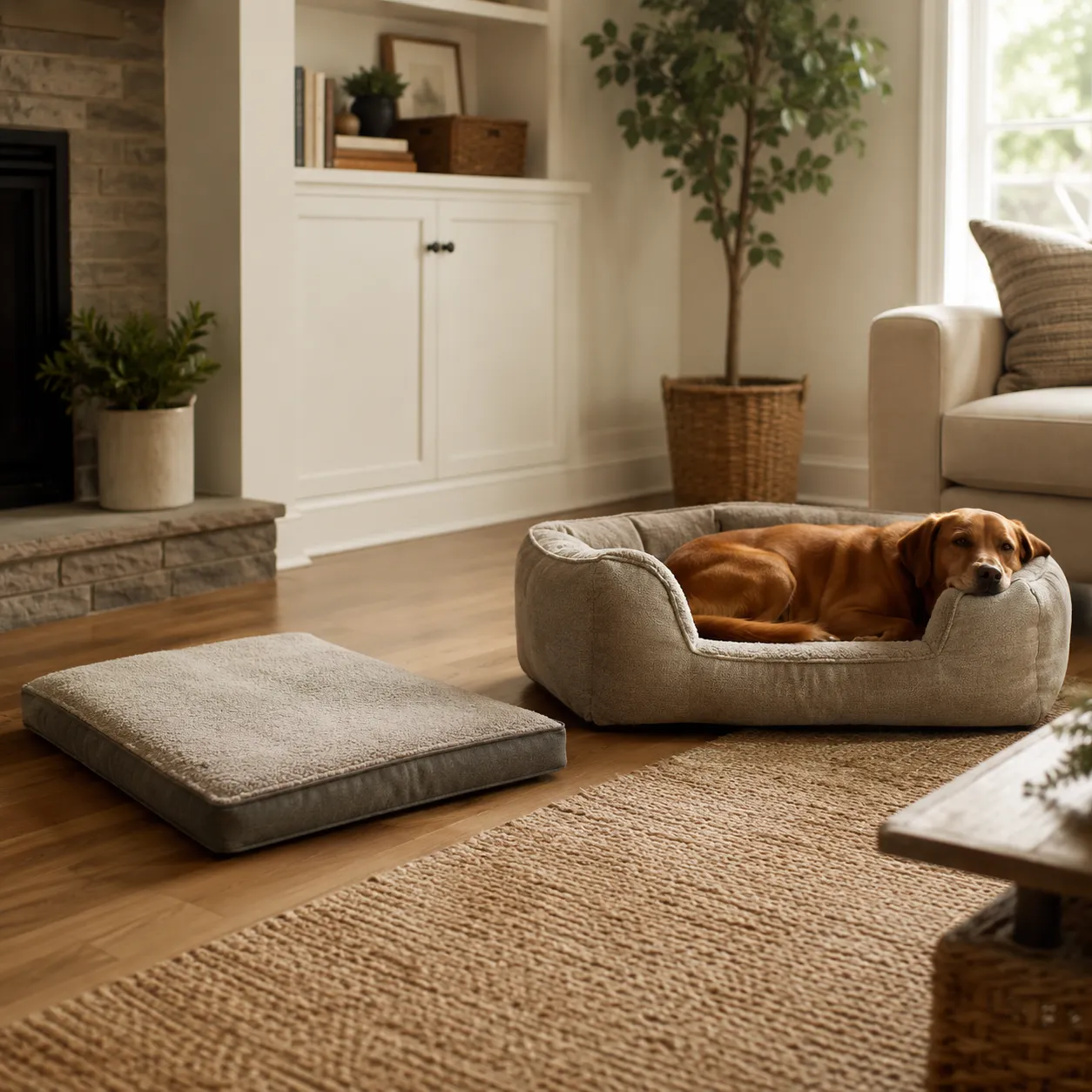
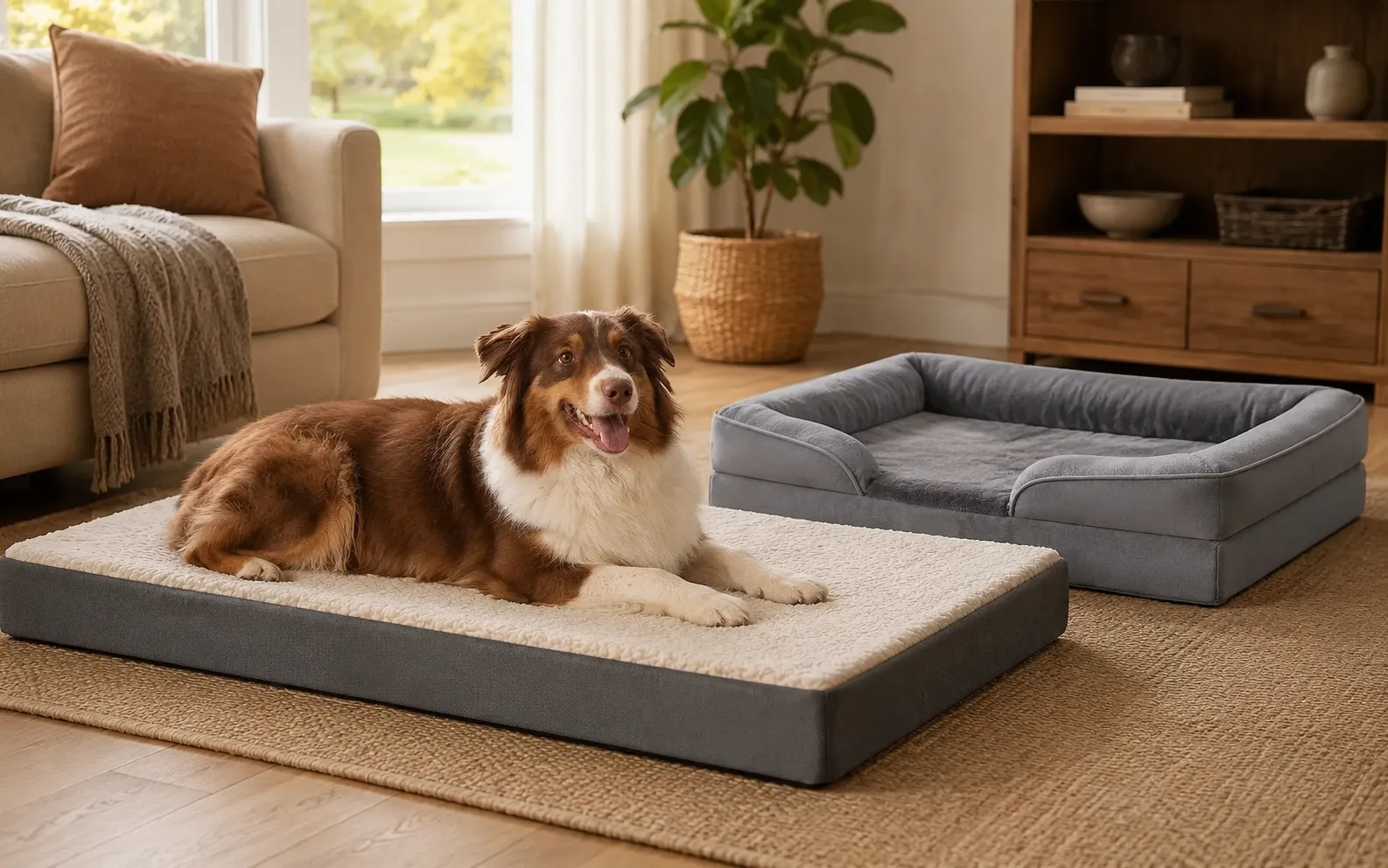
Not every dog bed should be washed the same way. Some beds have a cover that zips off. Some are meant to be washed as one piece. Some have foam inside that should not be soaked. Some look simple until you open them and find bolsters, liners, loose fill, or several layers that all need different care.
So before the whole thing goes into the washer, pause for a minute. The goal is not just to clean the bed. The goal is to clean it without turning it into a flat, lumpy, weird-smelling version of itself.
First check the care label
This is the step nobody wants to do, but it is usually the step that saves the bed.
Look for the care label on the cover, along a seam, or inside the zipper area. If you are still shopping online, check the Amazon listing before you buy. The title may say “washable dog bed,” but that does not always mean the entire bed can go into the washer.
Sometimes only the cover is washable. Sometimes the whole bed is washable. Sometimes the cover can be machine washed, but the foam or cushion inside needs to stay dry.
That difference matters more than it seems.
If the label says to remove the cover first, remove it. If it says not to wash the foam insert, do not wash the foam insert. If the drying instructions say air dry, do not guess with high heat because you want the bed ready faster.
A lot of dog beds lose their shape because the wrong piece gets soaked, twisted, overheated, or put back together before it is dry all the way through. The label may feel like a small detail, but with pet beds it is often the difference between “clean” and “ruined.”
Get the loose fur off before washing
Dog hair does not just disappear in the washing machine. It would be nice if it did.
A lot of it sticks to the fabric. Some rolls into clumps. Some settles into seams. Some ends up in the washer, where it waits for the next load of laundry.
Before washing the bed or cover, shake it out. Outside is better if you can do it. If not, shake it over a laundry room floor or somewhere you can sweep afterward.
Then go over it with whatever you already use for pet hair. A lint roller works. A vacuum hose works. A pet hair brush, rubber glove, or grooming-style tool can also pull up more than you expect.
The corners are worth extra attention. So are the seams, zipper area, and the tucked spots around bolsters. That is where fur likes to hide, especially on sofa-style dog beds.
This is also a good time to check the bed before it goes through the wash. If the zipper is already catching, a seam is opening, or the cover is starting to tear, washing may make that worse.
Wash the cover if the bed has one
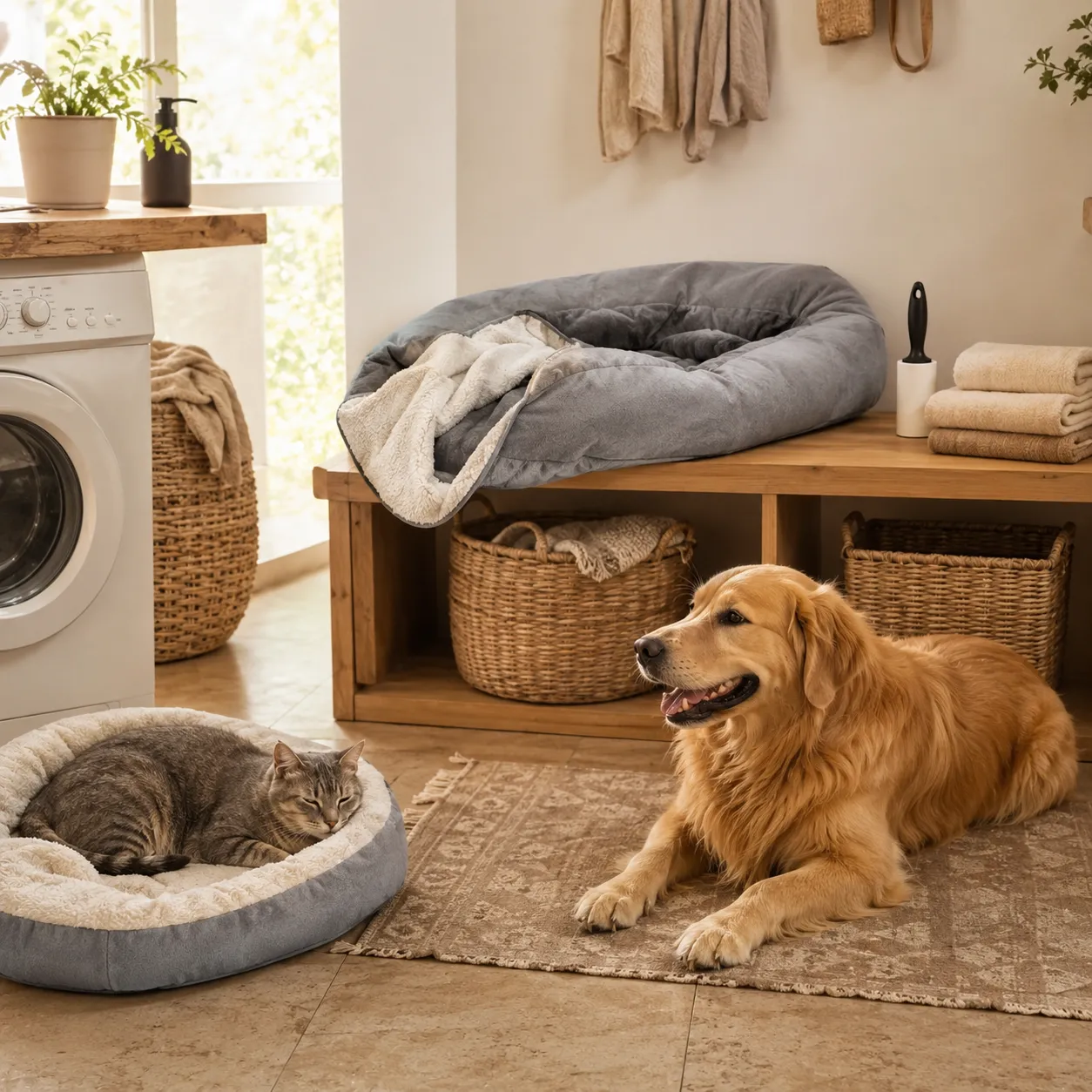
A removable cover is one of the easiest ways to clean a dog bed without messing with the inside.
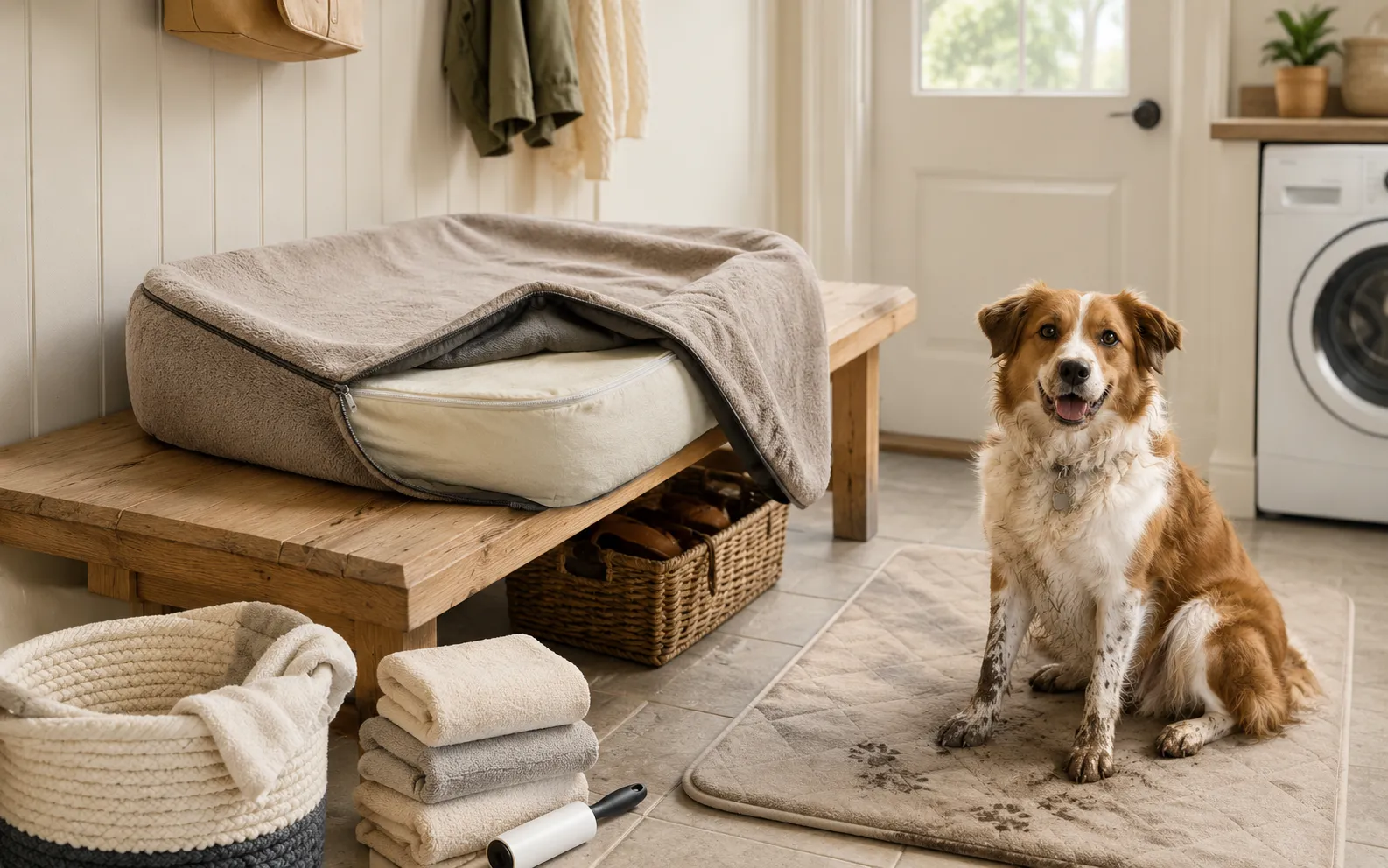
Unzip it slowly. Work it off around corners instead of pulling hard. Some covers slide off without much trouble. Others take a little patience, especially if the bed has raised sides or a shaped cushion inside.
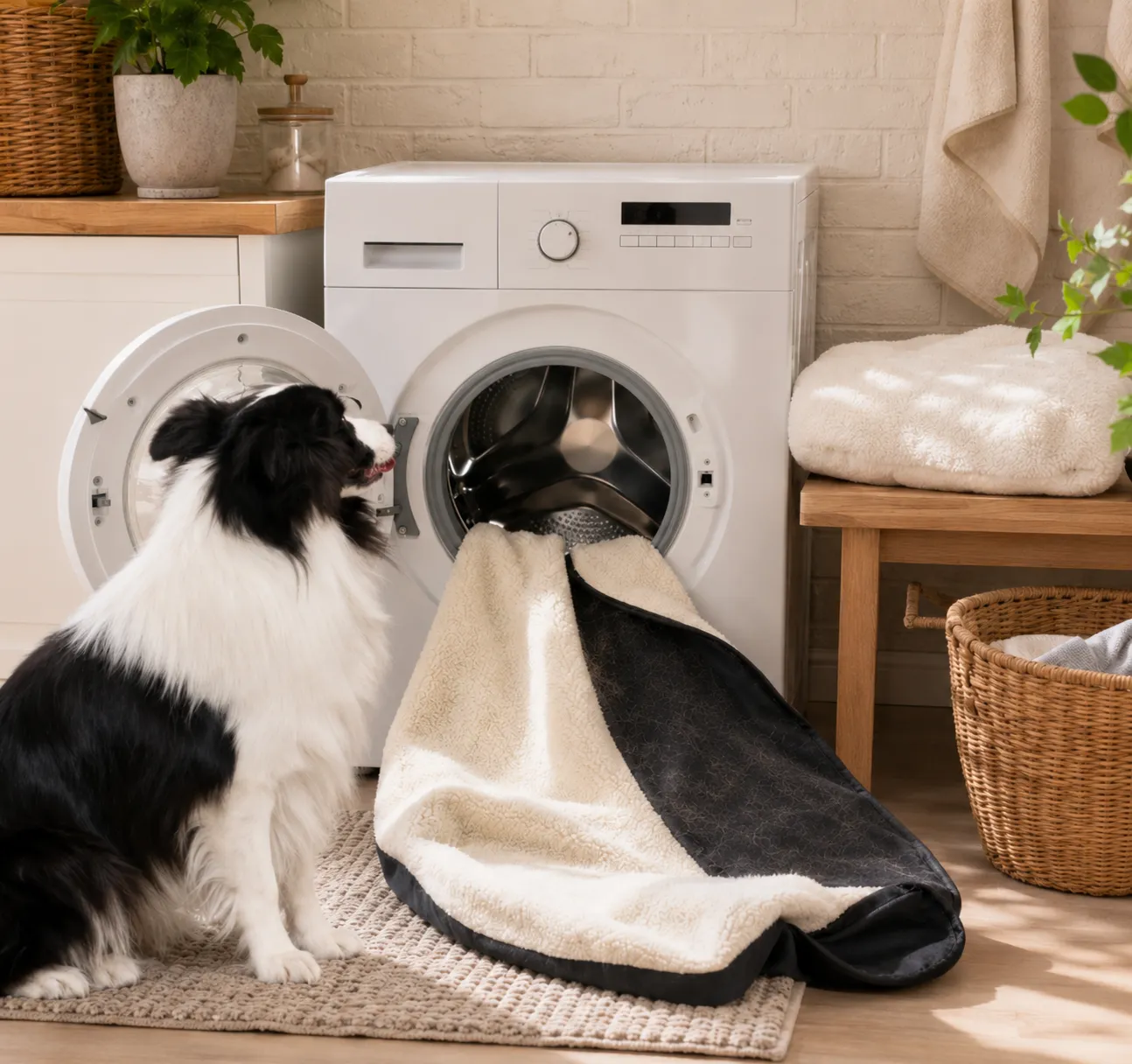
Once the cover is off, wash it the way the care label says. If the label confirms the cover is machine washable, wash the cover. Do not assume the cushion, foam, liner, or bolsters can go in too unless the instructions clearly say that.
This is where a lot of beds get damaged. The cover is dirty, so the whole bed gets tossed into the washer. That may be fine for a small flat mat if the product says so. It is not always fine for a large bed with foam inside.
Large beds can be awkward in a home washer. They may not rinse well if they are crammed in. They can come out twisted or heavy. And even when they look clean, they may take much longer to dry than expected.
If the bed gives you a washable cover, use that feature first. Most of the everyday mess is on the cover anyway: fur, paw dust, drool, crumbs, and whatever your dog brings in from the yard.
Foam needs a lighter hand
Foam is the part to be careful with.
Many foam dog bed inserts are not made for machine washing. Once foam gets soaked, it can hold water deep inside. The outside may feel dry while the middle is still damp. That can leave odor behind, and it can also change how the insert feels or sits inside the cover.
If the care label does not clearly say the foam can be washed, keep it out of the washer.
While the cover is being washed, let the foam air out somewhere clean and dry. If there is a small surface spot, check the care instructions for what kind of spot cleaning is allowed. Keep it light. Do not soak the insert just because one area looks dirty.
Before the cover goes back on, the foam should be fully dry. Not almost dry. Not dry on one side. Fully dry.
Thick foam can take longer than you think. If it still feels cool, heavy, damp, or soft in a wet way, give it more time. Putting the cover back on too early is one of the easiest ways to bring the smell right back.
Bolsters can make washing more annoying
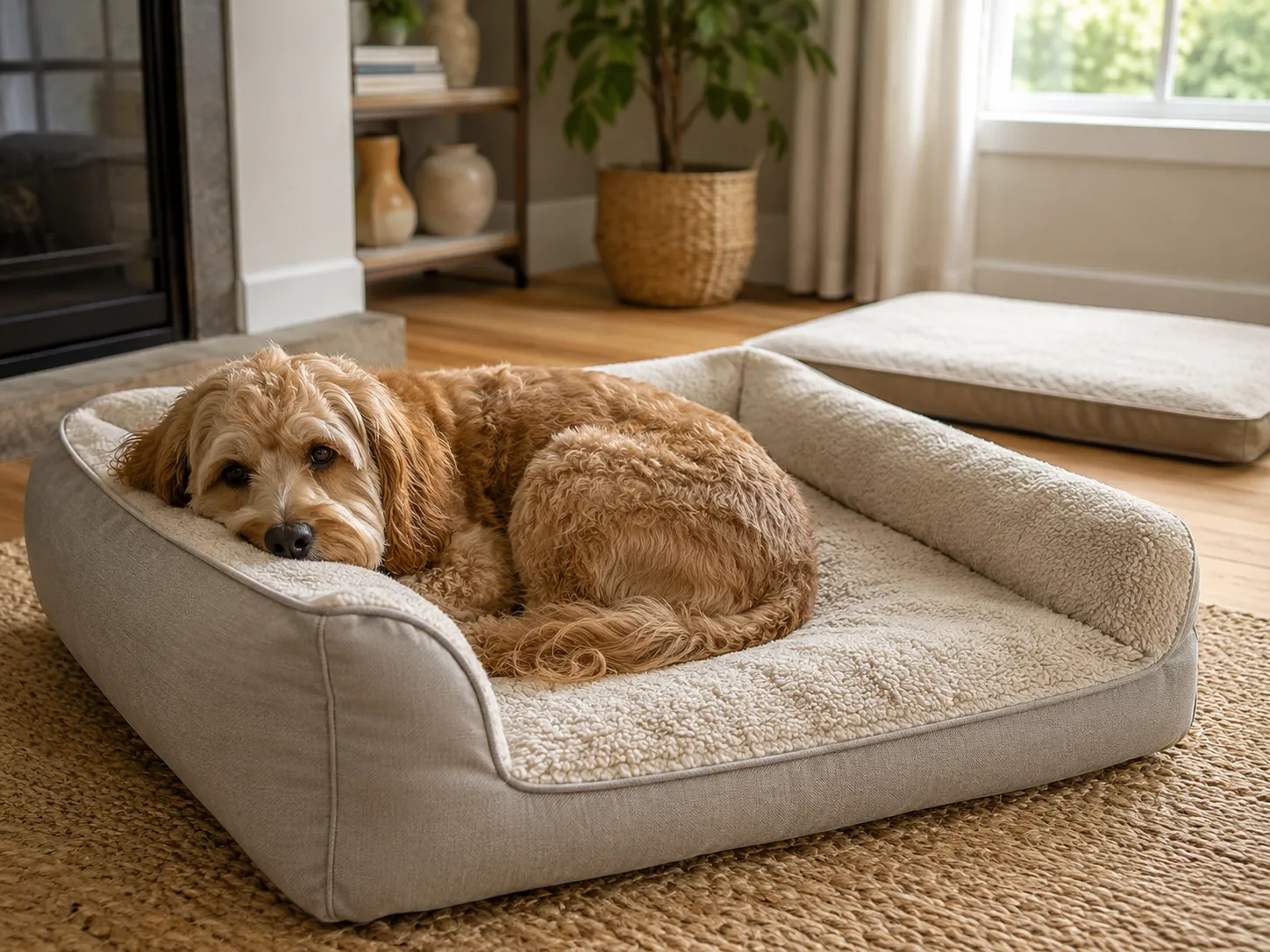
Bolster beds are nice when your dog likes an edge to lean on, but they are not always simple to clean.
Some bolsters are built into the removable cover. Some are part of the inner cushion. Some beds have separate pieces tucked inside, and you do not really know what you are dealing with until you unzip the bed.
Do not force it.
If the cover does not come off easily, slow down and look at how the bed is put together. Pulling hard around a raised edge can strain the zipper or tear the seam. A stuck corner is annoying, but a broken zipper is worse.
If the bolsters are washable, follow the care label. If they are part of the inside structure and the listing does not clearly say they can be washed, treat them carefully and keep them out of the machine.
Raised edges also take longer to dry. A bolster can feel dry on the outside while still holding moisture inside. Give those thicker areas extra time before you put the bed back together.
Drying is where people rush and regret it
Washing is only half the job. Drying is where a lot of dog beds start to go wrong.
A damp cover can trap smell. A thick cushion can stay wet inside. Too much heat can shrink a cover or make it fit differently than it did before. And if the bed is put back together too soon, it may smell worse the next day even though you just washed it.
Use the drying method on the care label. If machine drying is allowed, use the setting listed by the manufacturer. If the label says air dry, air dry it. If the instructions are unclear, avoid high heat.
Lay the cover flat if needed. Turn it over. Open up corners and seams so air can move through them. If the bed has separate pieces, dry them separately instead of stacking everything together.
Yes, it is annoying when your dog keeps looking for the bed. Still better than giving it back damp.
How often should you wash a dog bed?
There is no neat schedule that works for every dog.
A dog that sleeps on the bed every night will dirty it faster than a dog that only naps there once in a while. A heavy shedder is different from a dog with a short coat. A bed near the back door will usually need cleaning sooner than one in a quiet bedroom.
You can usually tell when it is time.
Fur buildup. Paw marks. Dirt around the edges. Drool spots. Food crumbs. A stale smell. A gritty or oily feel when you touch the cover. Any accident on the bed should be handled sooner, especially if liquid may have reached the inside.
For most homes, the easiest routine is not complicated. Remove fur often. Spot clean small messes when they happen. Wash the cover before the bed gets truly gross.
Waiting too long just makes the job harder.
And every now and then, unzip the bed and look under the cover. A washable cover is useful, but it does not mean the inside never needs attention.
What to check before buying a washable Bedsure bed
If you are shopping for a Bedsure dog bed on Amazon, check the exact product page before buying. Bedsure sells different pet bed styles, and the cleaning setup can vary from one bed to another.
Do not assume every Bedsure bed has the same cover, zipper, insert, liner, or washing instructions.
Before you order, look for the details that matter in real life:
- Does the cover come off?
- Is the cover machine washable?
- Is the whole bed washable, or only the cover?
- How should the foam, cushion, or fill be cleaned?
- Does the bed have bolsters or shaped edges?
- How should it be dried?
- Where is the zipper?
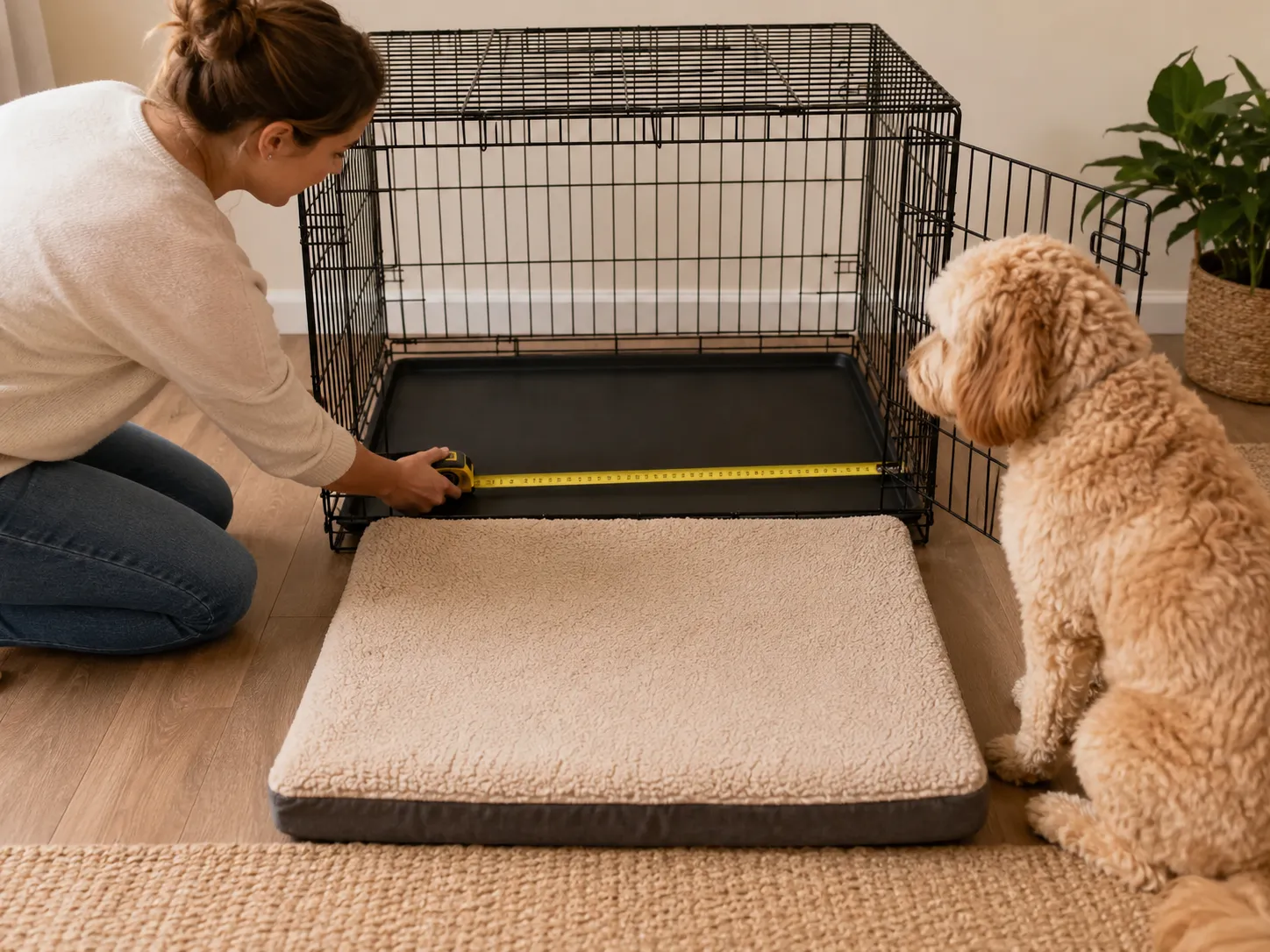
- Will the cover fit your washer without being a struggle?
- Does the listing clearly confirm a liner or waterproof layer?
That last point is important. Do not assume a bed has liquid protection just because the cover is washable. If a liner or waterproof layer matters for your dog, the listing needs to say it clearly.
A washable dog bed sounds simple until laundry day. A small crate mat is one thing. A large bolstered bed with foam inside is another.
For more cleaning-focused shopping, these pages fit naturally with this guide:
Can I put a dog bed in the washing machine?
Only if the care label says the bed can go in the washing machine. Some beds are washable as one piece, but many only have a washable cover. If there is foam, thick padding, or bolsters inside, check the instructions before washing the whole thing.
The product says “washable.” Does that mean the whole bed?
Not always. “Washable” can mean the cover is washable, not the entire bed. Look for the care section or product details that explain which part can be washed.
Should I remove dog hair before washing the cover?
It is worth doing. Shake the cover out, use a lint roller, vacuum it, or brush off the surface. You will not remove every hair, but the washer will have less to deal with.
Can foam dog bed inserts be washed?
Only if the product instructions clearly say so. Many foam inserts should stay out of the washer. Let them air out and spot clean only as directed.
Why does the bed still smell after I washed it?
The inside may not be fully dry, or the odor may be coming from the cushion instead of the cover. Take the bed apart if possible and check each layer. The bed should not be reassembled until every part is dry.
Is hot water better for washing a dog bed?
Not automatically. Use the temperature listed on the care label. Water that is too hot can affect some covers, especially if the fabric is not made for it.
Can I put the cover in the dryer?
Only if the care label allows it. Some covers can be machine dried on a specific setting. Others need air drying. High heat is not something to guess on.
Final take
Washing a dog bed is not about scrubbing harder or throwing the whole thing into the machine and hoping for the best.
Start with the care label. Get the loose fur off first. Wash the removable cover if that is the part made for washing. Keep foam out of the machine unless the instructions clearly say otherwise. Then let everything dry longer than you think it needs.
A washable dog bed can make normal pet mess easier to deal with — fur, mud, drool, everyday dog smell. But “washable” is not one universal rule. The real answer is in the care instructions, both before you wash the bed and before you buy it.
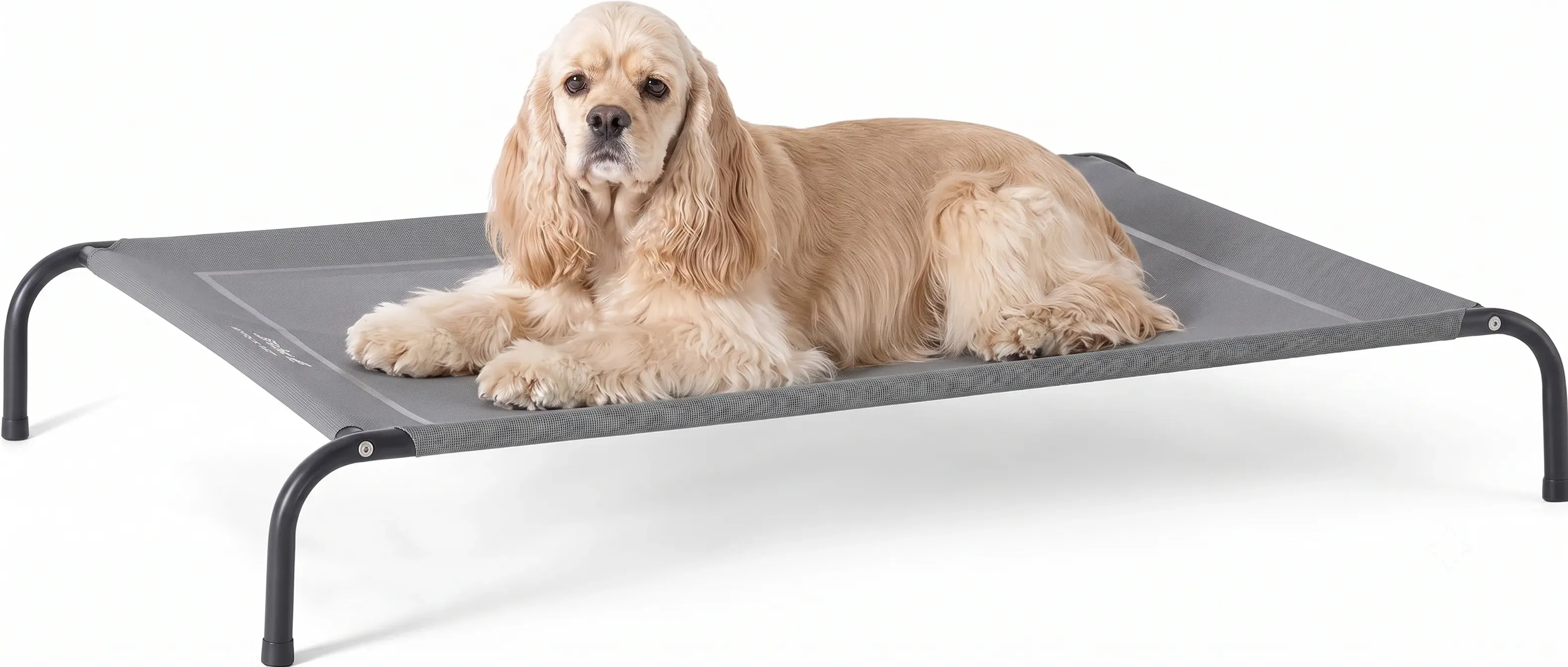 Bedsure Elevated Outdoor Dog Bed
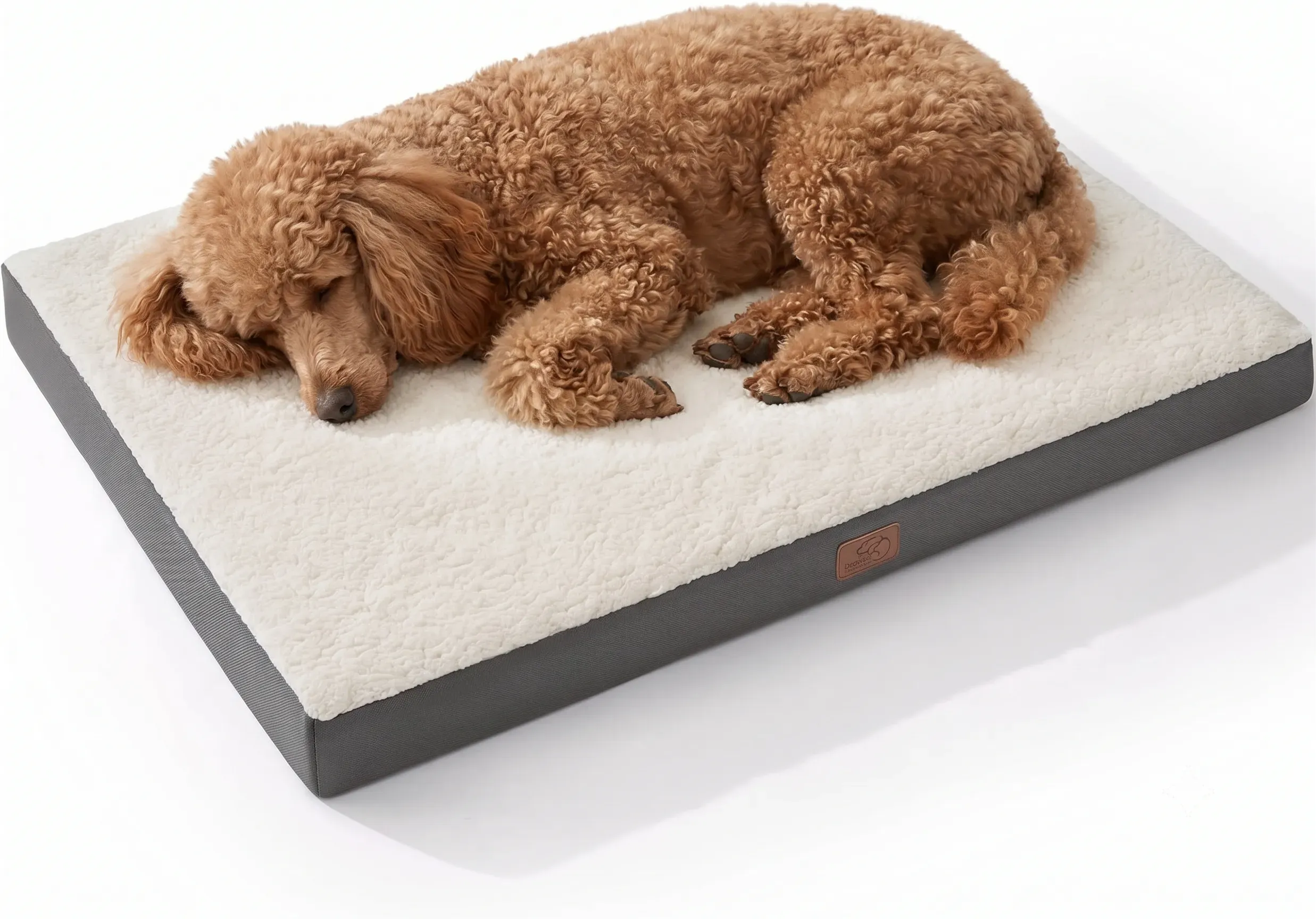 Bedsure Orthopedic Egg-Crate Dog Bed
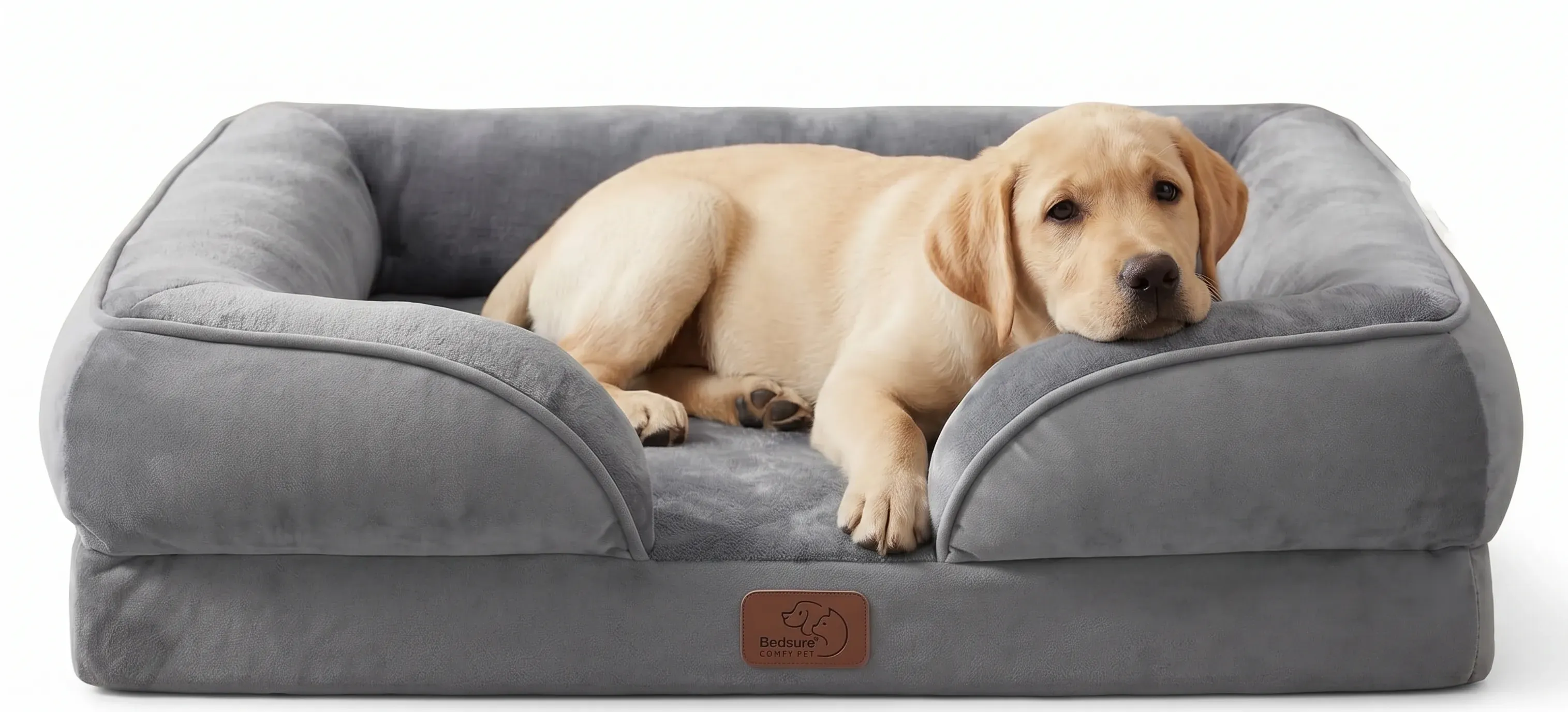 Bedsure Orthopedic Medium Dog Sofa Bed
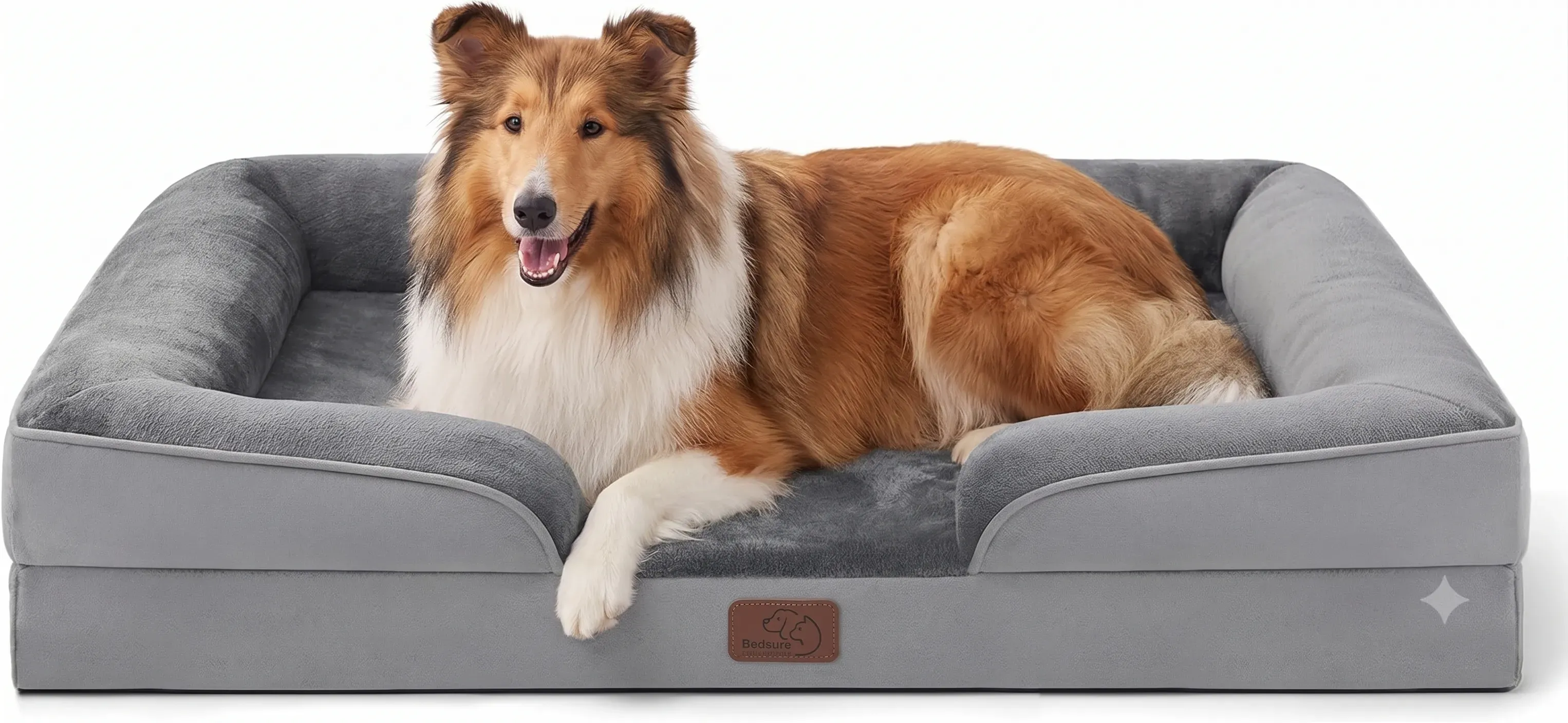 Bedsure Orthopedic Large Dog Sofa Bed
 Bedsure Calming Donut Dog Bed